<?xml version="1.0" encoding="utf-8" ?>
<rdf:RDF xmlns:rdf="http://www.w3.org/1999/02/22-rdf-syntax-ns#" xmlns:dc="http://purl.org/dc/elements/1.1/" xmlns:syn="http://purl.org/rss/1.0/modules/syndication/" xmlns="http://purl.org/rss/1.0/">


<channel rdf:about="https://old.fst.unife.it/it/ricerca/aree-di-ricerca-1/costuf/search_rss">
  <title>Coastal Study Unit Ferrara</title>
  <link>https://old.fst.unife.it</link>

  <description>
    
            These are the search results for the query, showing results 1 to 15.
        
  </description>


  <image rdf:resource="https://old.fst.unife.it/logo.png"/>

  <items>
    <rdf:Seq>
      
        <rdf:li rdf:resource="https://old.fst.unife.it/it/ricerca/aree-di-ricerca-1/costuf/contact/contact"/>
      
      
        <rdf:li rdf:resource="https://old.fst.unife.it/it/ricerca/aree-di-ricerca-1/costuf/links/link"/>
      
      
        <rdf:li rdf:resource="https://old.fst.unife.it/it/ricerca/aree-di-ricerca-1/costuf/projects/coastview-project"/>
      
      
        <rdf:li rdf:resource="https://old.fst.unife.it/it/ricerca/aree-di-ricerca-1/costuf/projects/protect-project"/>
      
      
        <rdf:li rdf:resource="https://old.fst.unife.it/it/ricerca/aree-di-ricerca-1/costuf/projects/f-ects-project"/>
      
      
        <rdf:li rdf:resource="https://old.fst.unife.it/it/ricerca/aree-di-ricerca-1/costuf/projects/india-project"/>
      
      
        <rdf:li rdf:resource="https://old.fst.unife.it/it/ricerca/aree-di-ricerca-1/costuf/projects/swamiee-project"/>
      
      
        <rdf:li rdf:resource="https://old.fst.unife.it/it/ricerca/aree-di-ricerca-1/costuf/projects/projects"/>
      
      
        <rdf:li rdf:resource="https://old.fst.unife.it/it/ricerca/aree-di-ricerca-1/costuf/equipment/bta-4024"/>
      
      
        <rdf:li rdf:resource="https://old.fst.unife.it/it/ricerca/aree-di-ricerca-1/costuf/equipment/sonarlite"/>
      
      
        <rdf:li rdf:resource="https://old.fst.unife.it/it/ricerca/aree-di-ricerca-1/costuf/equipment/obs-3-sensor"/>
      
      
        <rdf:li rdf:resource="https://old.fst.unife.it/it/ricerca/aree-di-ricerca-1/costuf/equipment/rcm-9"/>
      
      
        <rdf:li rdf:resource="https://old.fst.unife.it/it/ricerca/aree-di-ricerca-1/costuf/equipment/runti"/>
      
      
        <rdf:li rdf:resource="https://old.fst.unife.it/it/ricerca/aree-di-ricerca-1/costuf/equipment/valeport-current-meters"/>
      
      
        <rdf:li rdf:resource="https://old.fst.unife.it/it/ricerca/aree-di-ricerca-1/costuf/equipment/equipment"/>
      
    </rdf:Seq>
  </items>

</channel>


  <item rdf:about="https://old.fst.unife.it/it/ricerca/aree-di-ricerca-1/costuf/contact/contact">
    <title>Contact</title>
    <link>https://old.fst.unife.it/it/ricerca/aree-di-ricerca-1/costuf/contact/contact</link>
    <description></description>
    <content:encoded xmlns:content="http://purl.org/rss/1.0/modules/content/"><![CDATA[<h3></h3>
<h3><span><strong>Address of the department:</strong></span></h3>
<p>Dipartimento di Fisica e Scienze della Terra<br />Università di FerraraPolo Scientifico e Tecnologico<br />Via Saragat, 1<br />44122 Ferrara Italia</p>
<p> </p>
<p><img src="https://old.fst.unife.it/it/ricerca/aree-di-ricerca-1/costuf/Logocostuf.jpg/@@images/5dcef201-b37b-4cca-955a-7ecf3ba66f22.jpeg" style="text-align: right; float: right; " title="" class="image-inline" alt="" /></p>
<h3><strong><strong>Contact person:</strong></strong></h3>
<p>Prof.  <a href="http://docente.unife.it/paolo.ciavola">Paolo Ciavola</a><br />Tel +39 0532 974622<br />Fax +39 0532 974767<br />e-mail <a href="mailto:cvp@unife.it"><span style="text-decoration: underline;"><strong>cvp@unife.it</strong></span></a></p>]]></content:encoded>
    <dc:publisher>No publisher</dc:publisher>
    <dc:creator>Verde Massimo</dc:creator>
    <dc:rights></dc:rights>
    <dc:date>2009-11-24T11:40:00Z</dc:date>
    <dc:type>Pagina</dc:type>
  </item>


  <item rdf:about="https://old.fst.unife.it/it/ricerca/aree-di-ricerca-1/costuf/links/link">
    <title>Links</title>
    <link>https://old.fst.unife.it/it/ricerca/aree-di-ricerca-1/costuf/links/link</link>
    <description></description>
    <content:encoded xmlns:content="http://purl.org/rss/1.0/modules/content/"><![CDATA[<p style="text-align: center; "> </p>
<p><b>Risc-kit project - Resilience Increasing Strategies for Coasts Toolkit</b></p>
<p><a class="external-link" href="http://www.risckit.eu/np4/home.html">en site</a></p>
<p><a class="external-link" href="http://www.unife.it/progetto/risk-kit">it site</a></p>
<p> </p>
<p><span><strong>Regione Emilia-Romagna - Difesa della Costa (Italy)</strong></span></p>
<p><a class="external-link" href="http://ambiente.regione.emilia-romagna.it/geologia/temi/costa">http://ambiente.regione.emilia-romagna.it/geologia/temi/costa</a></p>
<p><br /> <br /> <strong> Regione Marche - Difesa della Costa (Italy)</strong></p>
<p><strong> </strong><a class="external-link" href="http://www.regione.marche.it/Difesadellacosta.aspx">http://www.regione.marche.it/Difesadellacosta.aspx</a></p>]]></content:encoded>
    <dc:publisher>No publisher</dc:publisher>
    <dc:creator>Verde Massimo</dc:creator>
    <dc:rights></dc:rights>
    <dc:date>2009-11-24T11:40:00Z</dc:date>
    <dc:type>Pagina</dc:type>
  </item>


  <item rdf:about="https://old.fst.unife.it/it/ricerca/aree-di-ricerca-1/costuf/projects/coastview-project">
    <title>CoastView project</title>
    <link>https://old.fst.unife.it/it/ricerca/aree-di-ricerca-1/costuf/projects/coastview-project</link>
    <description></description>
    <content:encoded xmlns:content="http://purl.org/rss/1.0/modules/content/"><![CDATA[<p style="text-align: center; "><img src="https://old.fst.unife.it/it/ricerca/aree-di-ricerca-1/costuf/projects/coastview.gif" alt="" class="image-inline" title="" /></p>
<p style="text-align: center; "><a class="external-link" href="http://cordis.europa.eu/project/rcn/61582_en.html">website</a></p>
<p style="text-align: center; "> </p>
<h3><strong>Video monitoring of littoral processes in support of coastal-zone management.</strong></h3>
<p style="text-align: justify; ">Why is a European Scale Project Required? A central theme (WP1) of the CoastView project is the development of a set of simplified Coastal State Indicators (CSIs). These are defined as, 'a minimum set of parameters that can simply, adequately &amp; quantitatively describe the dynamic-state of a coastal system'. The focus of the project will be to derive generic and environment specific CSIs that can be monitored using purpose-designed, cost-effective video techniques. The definition of these video-based CSIs can only be achieved within the framework of a European project for the following reasons:</p>
<ul style="text-align: justify; ">
<li>The need for a generic set of CSIs necessitates sampling in a range of physically different environments that typify European coastlines. This project includes coastal areas in the North Sea, English Channel, Atlantic Ocean and Mediterranean Sea. Each of these sites has very different wave climate, tidal regime, sediment type and morphology. Thus, in order to derive a set of generic CSIs that are appropriate to the whole Community we must include a minimum representative sub-set of European coastal environments. Generic CSIs will be developed and tested at each of these sites.</li>
<li>We also recognise the need for certain environment specific CSIs, which also necessitates measurements at a range of different types of coastline. Generally this would beyond the scope of a national-scale project. Four field sites have been prioritised for study in the CoastView Project in order to cover the typical types of European coastline and their associated management problems.</li>
</ul>
<p style="text-align: justify; ">These include:</p>
<p style="text-align: justify; ">- A continuous beach that is subject to shoreface renourishment, (Egmond, The Netherlands).</p>
<p style="text-align: justify; "><span>- A continuous beach protected for part of its length by offshore submerged-breakwaters, (Lido Di Dante, Italy).</span></p>
<p style="text-align: justify; ">- A coastal estuarine navigation channel subject to regular dredging, (El Puntal, Spain)</p>
<p style="text-align: justify; ">- A navigable estuary mouth with multiple, highly mobile sandbanks, (Teignmouth, UK).</p>
<p style="text-align: justify; ">These sites have been selected specifically for the following reasons: We require CSIs that are appropriate for both undefended coastlines with a soft engineering policy (Egmond) and coastlines defended by hard engineering (Lido Di Dante). These sites will yield CSIs that indicate the evolving state of these environments as well as the effectiveness and dispersion of beach nourishment and the stability and environmental impact of coastal structures. The third environmental category selected for study within CoastView is coastal inlets.</p>
<ul style="text-align: justify; ">
<li>The European dimension of this project brings together coastal managers and scientist from all over Europe. The consortium includes national scale coastal managers from Spain, Italy, the Netherlands and the United Kingdom (associated with each of the field sites) as well as scientists from six countries. Each country has slightly different management policies and implementation practices. A project of this kind allows an effective cross-fertilisation of best practice derived from a variety of European sources, and the development of video derived CSIs that may be applied universally around European Coastlines. This approach complements the EU strategy for a progression towards standardisation for coastal zone management. The alternative sum of national efforts in this direction would inevitably provide a less effective piecemeal approach to the problem with no generic value. It should also be noted that a reduction in the number of field sites would severely reduce the value of the CSIs derived from this research by reducing both the number of environment-specific CSIs generated, and the number of international scale end-users involved in the project.</li>
</ul>
<p style="text-align: justify; "> </p>
<p style="text-align: justify; "><br /><strong>Research tasks</strong></p>
<p style="text-align: justify; ">The work of the University of Ferrara will concentrate on the unprotected shore south of Lido di Dante (Ravenna, Italy). UF will assess the morphodynamic behaviour of the beach in natural conditions and compare it with the behaviour of the beach protected by the submerged breakwater, studied by the University of Bologna. One of the cameras installed on the tower built by the Regione Emilia will be provided with zoom capabilities to monitor beach behaviour to obtain information on the location of the inner bar, bathymetric variations between the bar and the foreshore, wave dissipation and shoreline. A permanent measuring station will be installed between the bar and the foreshore to provide information on wave characteristics, longshore and cross-shore current components. A 4-week campaign will be undertaken on the second year of the project, to obtain high frequency measurements of physical parameters, in order to accurately quantify wave dissipation across the bar-trough transition. During the field experiment offshore of the bar the <a href="https://old.fst.unife.it/it/ricerca/aree-di-ricerca-1/costuf/equipment/runti" class="internal-link">RUNTI</a> (Remote Unit for Nearshore Transport Investigation) benthic lander will be deployed to measure waves, currents and sediment resuspension at 0.5 m above the bed. A rig will be installed on the foreshore to obtain information on swash characteristics. Bathymetric surveys will be undertaken every six month in parallel with those carried out by the <a class="external-link" href="http://www.unibo.it/en/homepage">University of Bologna</a> on the protected beach, to compare beach behaviour. A small boat will be maintained on site to survey the beach at higher frequencies (e.g. monthly), in order to assess the impact of particular storm events. During each survey, an accurate determination of the shoreline position will be done using cinematic GPS techniques (Dynamic Method). The obtained shoreline will be compared to that obtained from Argus measurements to evaluate errors in the remote technique. During each main topographic and bathymetric survey (e.g. every six months), the dune base, the foreshore and the trough-bar transition will be sampled to assess seasonal and short-term grain size variations. The sedimentological information will be integrated with the profile data to obtain morphodynamic models of beach variability.</p>]]></content:encoded>
    <dc:publisher>No publisher</dc:publisher>
    <dc:creator>Verde Massimo</dc:creator>
    <dc:rights></dc:rights>
    <dc:date>2009-11-24T11:40:00Z</dc:date>
    <dc:type>Pagina</dc:type>
  </item>


  <item rdf:about="https://old.fst.unife.it/it/ricerca/aree-di-ricerca-1/costuf/projects/protect-project">
    <title>PROTECT project</title>
    <link>https://old.fst.unife.it/it/ricerca/aree-di-ricerca-1/costuf/projects/protect-project</link>
    <description></description>
    <content:encoded xmlns:content="http://purl.org/rss/1.0/modules/content/"><![CDATA[<h3 style="text-align: center; "><strong>PROTECT</strong></h3>
<p style="text-align: center; "><a class="external-link" href="http://databases.eucc-d.de/plugins/projectsdb/project.php?show=262">website</a></p>
<p style="text-align: center; "> </p>
<p style="text-align: left; ">The <strong>erosion of hard rock</strong> cliffs is inevitable and to-date it has been considered to be relatively unpredictable. A large proportion of the European coastline is subject to erosion and cliff recession. This dynamic process continually changes the hydrogeological and stress regimes, exposes fresh geological features and materials to changes in environment and stress. The assessment of cliff recession is an important factor in hazard assessment, conservation, amenity, and land-use planning. Hard rock cliffs erode through catastrophic collapse along pre-existing discontinuities in the rock mass. These may be ancient faults or fractures, orientated at a variety of angles to the cliff face, or relatively new tension fractures formed during cycles of cliff recession, sub-parallel to the cliff face. Glacial, periglacial and weathering processes, have frequently deposited a layer of reworked rock and soil onto the bedrock. This factor, and the inaccessibility of many cliff sections, makes the direct mapping of discontinuities in the bedrock difficult. The objectives of PROTECT are:</p>
<ul>
<li>To develop predictive tools, which will identify sections of cliffed coastline, that are approaching a state of imminent collapse and allow accurate predictions to be made of the timing of the collapse. This objective will be achieved through a number of scientific and technological objectives.</li>
<li>A non-invasive geophysical technique will be developed to measure the changes in physical properties of the rock mass near a cliff edge as the cliff changes from a stable to an unstable state. The technique determines the change in apparent resistivity with orientation of the measurement within a volume of the rock mass of approximately 145,000 m3. These variations are determined by the fracture network within the rock mass and changes with time will indicate changes of tension within the fractures. Increased tension indicates a weakening of the rock mass. The time scales of such changes and the extent of the affected zone near the cliff edge, will be determined.</li>
<li>A new methodology will be developed to monitor unstable cliff sections and predict the initiation of a fall through monitoring of micro movements along pre-existing cracks. These techniques are applicable to cliff sections that are in a state of collapse and will assist communities threatened by cliff erosion. Tuned microseismic methods will be able to monitor a coastline of 400 m length to a depth behind the cliff face of 40 m. The minimum crack surface along which movement can be detected will be 10 m2.</li>
<li>To contribute to the wider goal of understanding the physical properties of the rock mass, which leads to unstable cliffs. Data collected and collated during the project will be compared against the parameters being measured to predict cliff collapse. This will further the understanding of cliff collapse processes. The data collected will also enhance existing databases on the physical properties of coastal sections.</li>
<li>To work with and be guided by the user community. This will involve ensuring development is adapted to the users requirements. This will enable them to:</li>
</ul>
<p>Issue informed hazard warnings in areas of cliffs.</p>
<p>Make more informed land-use planning decisions in the coastal zone.</p>
<p>Maximise the use of the cliffed coastline as an amenity.</p>
<p>Develop informed conservation plans.</p>
<ul>
<li>Advance the technology sufficiently so that guidelines for it's implementation by coastal managers and/or development into an industrial prototype can be made. This will ensure that the outcomes of the project are utilised in the future.</li>
</ul>
<p> </p>
<p>Contract EVK3-CT-2000-00029</p>]]></content:encoded>
    <dc:publisher>No publisher</dc:publisher>
    <dc:creator>Verde Massimo</dc:creator>
    <dc:rights></dc:rights>
    <dc:date>2009-11-24T11:40:00Z</dc:date>
    <dc:type>Pagina</dc:type>
  </item>


  <item rdf:about="https://old.fst.unife.it/it/ricerca/aree-di-ricerca-1/costuf/projects/f-ects-project">
    <title>F-ECTS project</title>
    <link>https://old.fst.unife.it/it/ricerca/aree-di-ricerca-1/costuf/projects/f-ects-project</link>
    <description></description>
    <content:encoded xmlns:content="http://purl.org/rss/1.0/modules/content/"><![CDATA[<h3 style="text-align: center; "><strong>F-ECTS</strong></h3>
<p style="text-align: center; "><a class="external-link" href="http://cordis.europa.eu/project/rcn/43734_en.html">website</a></p>
<p style="text-align: center; "> </p>
<h3 style="text-align: left; "><strong>Feed-Backs of estuarine circulation and transport of sediments on phytobenthos</strong></h3>
<p><strong><br /></strong></p>
<p style="text-align: left; ">General Information: Coastal Zone Management (CZM) is widely recognised as a practice necessary for the sustainable use of coastal resources. Central to CZM is the recognition that in order to promote sustainability, coastal resources cannot be sectorially managed and the interactions that occur between adjacent sectors have to be fully considered. This is referred as an 'holistic' management approach.</p>
<p style="text-align: left; ">Many complex interactions occur between and within the different biological species in coastal ecosystems and their respective habitats. The ability of phytobenthic communities to locally modify the environmental characteristics of the ecosystem in which they live is one of the more significant relationships related to the human interactions.</p>
<p style="text-align: left; ">In fact, complicated feed-back and feed-forward loops exist, that couple the establishment of phytobenthic communities, water quality and physical oceanographic parameters. Accurate understanding of these interdependancies will represent a significant improving of the environmental management capabilities, particularly allowing a reliable foreseeing of the evolution of phytobenthic ecosystems and their reactions to man-generated disturbances.</p>
<p style="text-align: left; ">F-ECTS main focus is the interdisciplinary investigation of the ecosystem loops in estuarine environments involving phytobentos communities, hydrodynamics, nutrient cycling and sediment transport, with the aim of integrating some of the aspects already investigated in the INTRMUD and BENFLUX Mast Projects and in the ROBUST Environment project.</p>
<p style="text-align: left; ">The Lagoon of Venice (Italy) will be considered as a pilot case study. Two major seasonal field campaigns will be carried out and will allow the parameterization of the main physical and biological processes of the ecosystem providing a specific background for the assessment of the exportability of the obtained results in other two different european estuarine ecosystems:</p>
<p style="text-align: left; ">* Laguna della Ria Formosa (Portugal)<br /> * Roskilde Fjord (Denmark).</p>
<p style="text-align: left; ">Based on the parameterized biophysical interactions, the modeling activities within F-ECTS will enable the set up of linked modules for the simulation of the feed-back loop between the physical processes and the phytobenthic habitat. This loop controlling the survival and evolution of an estuarine ecosystem will be considered from the biological perspective. To accomplish this, biological, hydrodynamic and sediment transport processes will be modelled together in F-ECTS. In particular a new SPM-phytobenthos-reaction model for cohesive sediment and estuarine ecosystems will be developed and used as a common module to which different hydrodynamic models tailored for each specific case study site can be coupled.</p>
<p style="text-align: left; ">To demonstrate how the joint exploitation of the field measurements and the model outputs provide support to the production of new "environmental information" on the estuarine territories, GlS-based tools will be developed and implemented in the context of the pilot case study in a way that such new tools can be easily exported to other sites.</p>
<p style="text-align: left; ">These tools are expected to support the decision makers in identifying and planning CZM actions such as the ones related to wetland conservation and restoration, fishing, dredging and port operations.</p>
<p style="text-align: left; "><br />Venice Lagoon</p>
<p style="text-align: left; ">The lagoon of Venice is a large (approximate area is 550 km2 ), shallow coastal lagoon located along the Adriatic Sea in northeastern Italy. The lagoon originated nearly 6000 years ago when rising sea level flooded the upper Adriatic Wurmian Paleoplain. Two barrier islands separate the lagoon from the sea and water is exchanged through three large inlets.</p>
<p style="text-align: left; ">Most of the lagoon area is occupied by a central waterbody (about 400 km2 ), which is partly vegetated by macroalgae and seagrasses. The mean depth of the lagoon is 1.1 m and the tide range is 0.6 to 1 m, thus extensive mud flats are exposed at low tide.</p>
<p style="text-align: left; ">Intertidal saltmarshes exist, especially in the southwestern and northeastern portions of the lagoon. The marshes are considered very important in Europe due to their high productivity and habitat value. The area of the salt marsh has however been reduced due to reclamation, erosion, pollution, and natural and human-induced subsidence.</p>
<p style="text-align: left; ">The sediment dynamics of the lagoon have altered, with a net export of sediments out of the lagoon. This has been caused by the altering of river courses away from the lagoon, the construction of jetties which restrict the movement of marine sediments into the lagoon, and the effects of sediment erosion, (Day et al, 1998).</p>
<p style="text-align: left; "> </p>
<p style="text-align: left; ">Intersting Link:<br /><a href="http://www.ifm.uni-hamburg.de/" target="_blank">www.ifm.uni-hamburg.de</a></p>]]></content:encoded>
    <dc:publisher>No publisher</dc:publisher>
    <dc:creator>Verde Massimo</dc:creator>
    <dc:rights></dc:rights>
    <dc:date>2009-11-24T11:40:00Z</dc:date>
    <dc:type>Pagina</dc:type>
  </item>


  <item rdf:about="https://old.fst.unife.it/it/ricerca/aree-di-ricerca-1/costuf/projects/india-project">
    <title>INDIA project</title>
    <link>https://old.fst.unife.it/it/ricerca/aree-di-ricerca-1/costuf/projects/india-project</link>
    <description></description>
    <content:encoded xmlns:content="http://purl.org/rss/1.0/modules/content/"><![CDATA[<h3 style="text-align: center; "><strong>INDIA</strong></h3>
<p style="text-align: center; "><a class="external-link" href="http://ieeexplore.ieee.org/xpl/login.jsp?tp=&amp;arnumber=726330&amp;url=http%3A%2F%2Fieeexplore.ieee.org%2Fxpls%2Fabs_all.jsp%3Farnumber%3D726330">website</a></p>
<p style="text-align: center; "> </p>
<p style="text-align: left; ">The <strong>INDIA project</strong> involved a multi-institute, multi-disciplinary study of the interacting hydrodynamic and morphodynamics occurring at tidal inlet entrances and along adjacent coastlines and with the twin aims of improving understanding of complex interactive coastal processes and validating numerical models. Owing to the complexity and scale of such systems and the availability of limited resources, the project used a combination of state-of-the-art and innovative fieldwork equipment, including remote sensing devices, as well as a range of three dimensional numerical models to provide information on wind, wave, surge, tide and sediment movement at a particular European coastal site (Barra Nova Inlet, southern Portugal), which covers a range of environmental conditions, including significant aeolian transport.</p>
<p>Specifically, the INDIA project addresses the following research areas: updrift sediment transport flux and mechanisms; inlet by-passing mechanisms for sediments; inlet hydrodynamics (i.e. tidal asymmetry and the implications for the sediment budget); modification of surface wave amplitude, form and direction by the flood/ebb deltas and by an inlet; flood/ebb delta dynamics; sediment flux through an inlet; overwash processes and contribution to sediment budget; aeolian processes, interactions with the beach and contribution to sediment budget; and improved understanding of surf zone processes. In pursuit of these objectives, a number of areas of innovation can be identified in the INDIA project: high resolution rapid bathymetric surveys of the study area using LASER technology; HF, VHF and wave Radar measurements of surface currents and waves; monitoring and measurement of surf zone hydrodynamics using a video system; ADV and PIV observations of turbulence in the surf zone and tidal channel; sediment transport measurements using multi-frequency acoustics; near-bed hydrodynamics and sediment dynamics using autonomous tripods; use of integrated instrument packages to measure hydrodynamic and sediment parameters at offshore locations; and in situ observations of bedforms in the surf zone and offshore using a mobile instrument platform equipped with hydrodynamic and suspended sediment sensors and video camera.</p>
<p>Modelling activities relateD observed wind, tide, surge and wave processes with the observed sediment transport, bedform migration bathymetry and beach/dune profiles within the bounds of the study area using the following numerical models: 2DH hydrodynamic model of the lagoon; quasi 3D offshore hydrodynamic model; wave models; quasi-3D hydrodynamics and nearshore sediment model; lDV hydrodynamics and sediments bottom boundary layer model; 2DV surf/swash zone model; and 2DV aeolian transport model.</p>
<p>Modelling was utilised in order to provide cross-checks on field data quality, model boundary conditions for inshore modelling and to aid in the study of physical processes and in the prediction of inlet response to changes in sediment supply, wave climate and sea level.</p>
<p> </p>
<p><strong>Intersting Link:</strong><br /><a class="external-link" href="http://noc.ac.uk/search">http://noc.ac.uk/search</a></p>]]></content:encoded>
    <dc:publisher>No publisher</dc:publisher>
    <dc:creator>Verde Massimo</dc:creator>
    <dc:rights></dc:rights>
    <dc:date>2009-11-24T11:40:00Z</dc:date>
    <dc:type>Pagina</dc:type>
  </item>


  <item rdf:about="https://old.fst.unife.it/it/ricerca/aree-di-ricerca-1/costuf/projects/swamiee-project">
    <title>SWAMIEE project</title>
    <link>https://old.fst.unife.it/it/ricerca/aree-di-ricerca-1/costuf/projects/swamiee-project</link>
    <description></description>
    <content:encoded xmlns:content="http://purl.org/rss/1.0/modules/content/"><![CDATA[<h3 style="text-align: center; "><strong>SWAMIEE</strong></h3>
<p style="text-align: center; "><a class="external-link" href="https://iris.unife.it/handle/11392/522320?mode=full.43#.VXay_M_tlBd">website</a></p>
<p style="text-align: center; "> </p>
<p style="text-align: left; "><strong>Project Framework</strong></p>
<p>Estuarine coastlines make up a significant part of the coasts of Europe. At the same time, estuaries comprise some of the most heavily industrialised and inhabited areas. Increased development of these shallow water systems has not only accentuated concerns over deteriorating environmental quality, but the resultant requirement for essential remedial activity has placed serious economic strain on the various users. Estuarine systems play a very important role in the sedimentary cycle, being one of the principal routes of the sedimentary exchanges between land and sea, often acting as sedimentary sinks. Therefore, they may form some of the most polluted environments in Europe, requiring special studies as developed during the project. The results of the project will be presented during the STRAEE workshop in September 2002 in Ferrara.</p>
<p>During the SWAMIEE project an interdisciplinary approach, based upon established and innovative research methods, was adopted to identify and comprehend the complex processes involved. Not only the long-term evolution of these systems was studied, but also the medium- and short-term response to both natural and anthropogenic forcing. The STRAEE workshop will allow to sum up the recent increased knowledge on aspects of estuarine development, within the key objectives outlined below:</p>
<p>1. The understanding, at specific industrialised and non-industrialised locations, of the movement of water and sediment, at a variety of time-scales. This approach encompasses both well established and innovative techniques, developed by the participants of the SWAMIEE consortium.</p>
<p>2. The integration of various data sets into predictive numerical models, for use in the establishment of regional patterns of water and sediment movement and their sensitivity to changes in the controlling mechanisms. This requires that the natural evolution of the system is modelled and that a variety of anthropogenic influences is superimposed.</p>]]></content:encoded>
    <dc:publisher>No publisher</dc:publisher>
    <dc:creator>Verde Massimo</dc:creator>
    <dc:rights></dc:rights>
    <dc:date>2009-11-24T11:40:00Z</dc:date>
    <dc:type>Pagina</dc:type>
  </item>


  <item rdf:about="https://old.fst.unife.it/it/ricerca/aree-di-ricerca-1/costuf/projects/projects">
    <title>Projects</title>
    <link>https://old.fst.unife.it/it/ricerca/aree-di-ricerca-1/costuf/projects/projects</link>
    <description></description>
    <content:encoded xmlns:content="http://purl.org/rss/1.0/modules/content/"><![CDATA[<h2 style="text-align: center; "></h2>
<p style="text-align: left; "> </p>
<p>Main projects undertaken in the past recent years or still on going:</p>
<p> </p>
<ul>
<li style="text-align: justify; "><span style="text-align: start; "><strong>OVERSEE PROJECT "GLOBAL ECV MULTISENSOR MAPPING FOR COASTAL ECOSYSTEM SERVICES PROTECTION"</strong> - The project aims to promote the use of the available data from the hyperspectral PRISMA satellite sensor and to integrate the hyperspectral bands with other source of information in synergy with ASI, ESA and NASA satellites missions’ products. The research focuses its activities and pilot actions on a targeted set of nationally and internationally recognised protected areas focusing on coastal ecosystems and providing indicators based on multitemporal data extracted from satellite multispectral (Sentinel2, Landsat, Spot), hyperspectral (PRISMA) and SAR (CSKM, Sentinel) sensors.</span></li>
<li style="text-align: justify; "><span style="text-align: start; "><strong><a class="external-link" href="http://www.ecfas.eu"><strong>2020 project ECFAS - A PROOF-OF-CONCEPT FOR THE IMPLEMENTATION OF A <span>EUROPEAN COPERNICUS COASTAL FLOOD AWARENESS SYSTEM</span></strong>,</a></strong> the project aims to improve <span>the </span><span>Copernicus Emergency Management Service</span><span> by demonstrating the technical and operational feasibility of a </span><span>European Coastal Flood Awareness System. The objectives include</span> <span>a fully integrated risk cycle monitoring service, through the implementation of an </span><span>awareness system </span><span>specifically targeted to coastal areas (preparedness phase) and </span><span>impact assessment</span><span> (response phase) in the aftermath of a flood event, playing a fundamental role for the implementation of effective recovery and prevention actions;</span> furthermore, to impr<span>ove </span><span>marine forcing hindcasting and forecasting</span><span> through the integration of existing data and models of CMEMS and comparison with the ANYEU-SSL model developed in the EU H2020 ANYWHERE project and identify marine forcing thresholds able to trigger coastal flooding. Finally, to u<span>se state-of-the-art algorithms to </span><span>automatically detect shoreline position</span><span> through the use of satellite images.</span></span></span></li>
</ul>
<ul>
<li style="text-align: justify; "><span style="text-align: start; "><strong><a class="external-link" href="http://anywhere-h2020.eu/"><span>EnhANcing emergencY management and response to extreme WeatHER and climate Events (ANYWHERE)</span>,</a></strong> the project wants to develop <span>tools to support realtime coordination of the emergency response operations to face challenge of the extreme weather and climate events. The objectives are: e<span>mploy the cutting edge innovative technologies to build a pan-europeans multi-hazard platform for faster analysis and anticipation of the risk prior the vent occurrence; improve coordination of the emergency actions and assist to raise the self-preparedness.</span></span></span></li>
</ul>
<ul>
<li style="text-align: justify; "><span style="text-align: start; "><strong><a href="https://old.fst.unife.it/it/ricerca/aree-di-ricerca-1/costuf/projects/risc_kit" class="internal-link">Resilience-Increasing Strategies for Coasts - toolKIT (RISC-KIT)</a></strong>, t<span>he aim of the project is to deliver an open-source and open-access toolkit, including methods, tools and management approaches to reduce risk and increase resilience to high-impact climatological events in the coastal zone. These products will enhance forecasting, prediction and early warning capabilities, improve the assessment of long-term coastal risk, evaluate coastal Disaster Risk Reduction (DRR) strategies and optimize the mix of prevention, mitigation and preparedness measures</span></span></li>
<li style="text-align: justify; "><strong><a href="https://old.fst.unife.it/it/ricerca/aree-di-ricerca-1/costuf/projects/micore" class="internal-link">Morphological Impacts and COastal Risks induced by Extreme storm events (MICORE)</a></strong>, th<span style="text-align: justify; ">e aim of the project was to develop and demonstrate online tools for reliable predictions of the morphological impact of marine storm events in support of civil protection mitigation strategies. The project was specifically targeted to contribute to the development of probabilistic mapping of the morphological impact of marine storms and to the production of early warning and information systems to support long-term disaster reduction.</span></li>
<li style="text-align: justify; "><strong><a href="https://old.fst.unife.it/it/ricerca/aree-di-ricerca-1/costuf/projects/conhaz" class="internal-link">Costs of Natural Hazards (CONHAZ)</a></strong>, <span>provided more insight into cost assessment methods, which is needed for integrated planning, budgeting and policy action prioritisation for the various natural hazards</span></li>
<li style="text-align: justify; "><strong><a href="https://old.fst.unife.it/it/ricerca/aree-di-ricerca-1/costuf/projects/cadsealand" class="internal-link">Coastal State and Evolution in Cadses (CADSEALAND)</a></strong>, focused on collecting the existing hydro-meteo-marine observations and identification of appropriate methodologies to be applied in assessing conditions of risk (either natural of anthropogenic) for coastal areas. Several partner joined the project from 3 different countries: Italy, Romania and Greece.</li>
<li style="text-align: justify; "><strong><a href="https://old.fst.unife.it/it/ricerca/aree-di-ricerca-1/costuf/projects/coastview-project" class="internal-link">Video monitoring of littoral processes in support of coastal zone management (Coastview)</a></strong>, supported by the CEC under the 5th Framework (2002-on-going). The project aims at identifying Coastal State Indicators which could be easily measured with the support of innovative video-techniques. The author contributes to the understanding of the mobility of nearshore bars and associated shoreline changes.</li>
<li style="text-align: justify; ">Study of the evolution of lagoon and coastal lakes in the Mediterranean, supported with university funds (MURST ex-60%). The project (2001-on-going) studies coastal lakes in Puglia and Sicily to understand the Holocene evolution of the sedimentary systems.</li>
<li style="text-align: justify; "><strong><a href="https://old.fst.unife.it/it/ricerca/aree-di-ricerca-1/costuf/projects/protect-project" class="internal-link">Prediction Of The Erosion of Cliffed Terrains (PROTECT)</a></strong>, supported under the V Framework of the European Union (2001-on-going). The project studies the erosion of rocky cliff faces developing innovative geophysical techniques.</li>
<li style="text-align: justify; "><strong><a href="https://old.fst.unife.it/it/ricerca/aree-di-ricerca-1/costuf/projects/f-ects-project" class="internal-link">Feed-backs of Estuarine Circulation and Transport of Sediments on Phytobenthos (F-ECTS)</a></strong>, supported by the CEC under the Marine Sciences and Technology programme (1998-2001). The project studied the relationship between sediment transport and benthic communities and involved fieldwork in the Venice Lagoon (Italy), the Ria Formosa (Portugal), the Roskilde Fjord (Denmark).</li>
<li style="text-align: justify; "><strong><a href="https://old.fst.unife.it/it/ricerca/aree-di-ricerca-1/costuf/projects/swamiee-project" class="internal-link">Sediment and Water Movement in Industrialised Estuarine Environments (SWAMIEE)</a></strong>, supported by the CEC under the Training and Mobility of Researchers network (1997-2001). The project studied sediment transport processes in two European estuaries: the Gironde (France) and the Guadiana Estuary (Portugal).</li>
<li style="text-align: justify; "><a href="https://old.fst.unife.it/it/ricerca/aree-di-ricerca-1/costuf/projects/india-project" class="internal-link"><strong>Inlet Dynamics Initiative: Algarve</strong><strong> (INDIA)</strong></a>, supported by the CEC under the Marine Sciences and Technology programme (1997-2000). The project studied a tidal inlet of the Ria Formosa barrier-island system, in order to develop conceptual models of inlet evolution. Fieldwork and modelling were aided by the development of video techniques for remote sensing. Dr Ciavola carried out in-situ measurements of waves and currents on the ebb-delta complex.</li>
</ul>]]></content:encoded>
    <dc:publisher>No publisher</dc:publisher>
    <dc:creator>Verde Massimo</dc:creator>
    <dc:rights></dc:rights>
    <dc:date>2009-11-24T11:40:00Z</dc:date>
    <dc:type>Pagina</dc:type>
  </item>


  <item rdf:about="https://old.fst.unife.it/it/ricerca/aree-di-ricerca-1/costuf/equipment/bta-4024">
    <title>BTA 4024</title>
    <link>https://old.fst.unife.it/it/ricerca/aree-di-ricerca-1/costuf/equipment/bta-4024</link>
    <description></description>
    <content:encoded xmlns:content="http://purl.org/rss/1.0/modules/content/"><![CDATA[<h2 style="text-align: center; "><b>BTA 4024 </b></h2>
<h2 style="text-align: center; "></h2>
<table>
<tbody>
<tr>
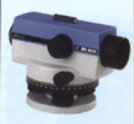
<td>The <strong>BTA 4024</strong> of <strong>SALMOIRAGHI</strong> is a robust, compact and reliable automatically level for field work. It is provided with a protected metallic horizontal circle and has a lecture of 10c. It includes a compensator with an non-magnetic attenuator, a direct vision telescope, a frictional micrometric screw and a sight collimator.
<p>Model BTA 4024<br />Enlarging 24 x<br />Lens opening 30 mm<br />Minimal distance 0.5 m<br />Constant for distance measurements 100<br />Compesator with functional field +/- 13 c<br />Compesator accuracy +/- 0.5<br />Medium kilometric error +/- 2.5 mm<br />Weight 1.8 Kg</p>
</td>
<td style="padding-left: 30px; "><img src="https://old.fst.unife.it/it/ricerca/aree-di-ricerca-1/costuf/equipment/bta.jpg" alt="" class="image-inline" title="" /></td>
</tr>
</tbody>
</table>]]></content:encoded>
    <dc:publisher>No publisher</dc:publisher>
    <dc:creator>Verde Massimo</dc:creator>
    <dc:rights></dc:rights>
    <dc:date>2009-11-24T11:40:00Z</dc:date>
    <dc:type>Pagina</dc:type>
  </item>


  <item rdf:about="https://old.fst.unife.it/it/ricerca/aree-di-ricerca-1/costuf/equipment/sonarlite">
    <title>SonarMite</title>
    <link>https://old.fst.unife.it/it/ricerca/aree-di-ricerca-1/costuf/equipment/sonarlite</link>
    <description></description>
    <content:encoded xmlns:content="http://purl.org/rss/1.0/modules/content/"><![CDATA[<h2 style="text-align: center; "></h2>
<p><span>SonarMite</span></p>
<p><strong><br /></strong></p>
<table>
<tbody>
<tr>
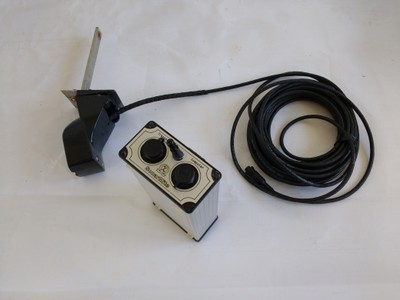
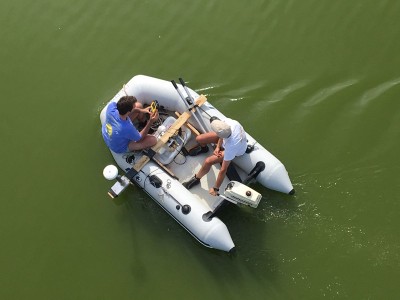
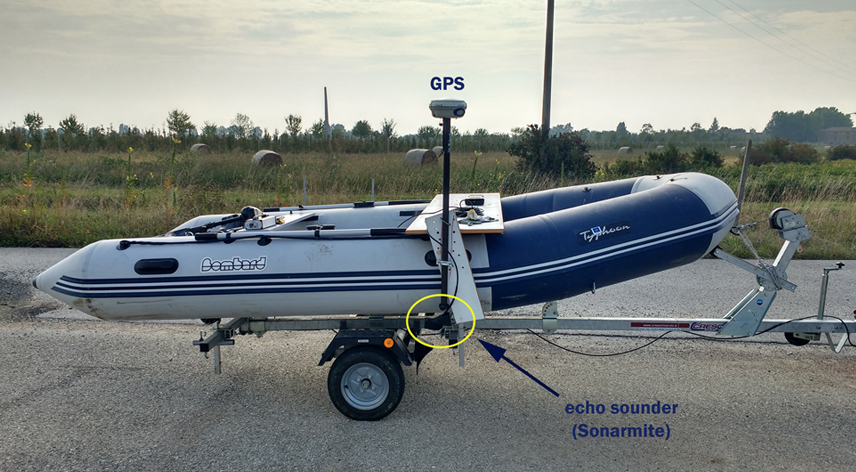
<td style="text-align: justify; ">The <em><strong>SonarMite</strong></em> is a low cost single beam echo sounder with a specification designed for use by surveyors using total survey stations and GPS for inshore, lake and river hydrographic surveys. The SonarMite is sold as a complete package including batteries, charger, leads, transducer, internal data logging and survey processing software for less than half the cost of most survey echo sounders. The device can be used as a conventional echo sounder with data output to the in-built serial port (RS232C). <span>The design uses state-of-the-art active transducers to provide a high quality digital trace with low data drop out. The SonarMite can be connected to the laptop or the GPS datalogger both by the serial port or the bluethooth connection.</span></td>
</tr>
</tbody>
</table>
<p style="text-align: justify; "> </p>
<table>
<tbody>
<tr>
<td colspan="4"><strong>Specification</strong></td>
</tr>
<tr>
<td></td>
<td colspan="2">
<div>Transducer Frequency</div>
</td>
<td>
<div>235KHz Active Transducer</div>
</td>
</tr>
<tr>
<td></td>
<td colspan="2">
<div>Beam Spread</div>
</td>
<td>
<div>8 to 10 Degrees</div>
</td>
</tr>
<tr>
<td></td>
<td colspan="2">
<div>Depth Range</div>
</td>
<td>
<div>0.30m to 90.00m (Software                                        limited)</div>
</td>
</tr>
<tr>
<td></td>
<td colspan="2">
<div>Accuracy</div>
</td>
<td>
<div>+/-0.025m (RMS)</div>
</td>
</tr>
<tr>
<td></td>
<td colspan="2">
<div>Sound Velocity Range</div>
</td>
<td>
<div>1400 to 1600 m/sec</div>
</td>
</tr>
<tr>
<td></td>
<td colspan="2">
<div>Data Output Range</div>
</td>
<td>
<div>2Hz</div>
</td>
</tr>
<tr>
<td></td>
<td colspan="2">
<div>Ultrasonic Ping Rate</div>
</td>
<td>
<div>3 to 6 Hz (Depth dependent)</div>
</td>
</tr>
<tr>
<td></td>
<td colspan="2">
<div>Internal Power</div>
</td>
<td>
<div><span>10.0v x 1.5AHr Internal Nickel Metal Hydride sealed battery (NiMh)</span></div>
</td>
</tr>
<tr>
<td></td>
<td colspan="2">
<div>Power Consumption</div>
</td>
<td>
<div>70ma to 120ma (contrast                                        dependent)</div>
</td>
</tr>
<tr>
<td></td>
<td colspan="2">
<div>Usable Battery Life</div>
</td>
<td>
<div>8Hrs to 12Hrs between charging</div>
</td>
</tr>
<tr>
<td></td>
<td colspan="2">
<div>Stand-By Battery Life</div>
</td>
<td>
<div>1000 Hours</div>
</td>
</tr>
<tr>
<td></td>
<td colspan="2">
<div>Battery Charge</div>
</td>
<td>
<div><span>Switch mode charger for 90..250vac, 40..60Hz</span></div>
</td>
</tr>
<tr>
<td></td>
<td colspan="2">
<div>Work Anywhere</div>
</td>
<td>
<div>2/3 Round/Square pin charger                                        adaptor</div>
</td>
</tr>
<tr>
<td></td>
<td colspan="2">
<div>Internal Memory</div>
</td>
<td>
<div>128Kb/8000 pnts (512Kb                                        option)</div>
</td>
</tr>
<tr>
<td></td>
<td colspan="2">
<div>Data Time Lag</div>
</td>
<td>
<div>250uS Internal logging/300ms                                        RS232 data output</div>
</td>
</tr>
<tr>
<td></td>
<td colspan="2">
<div>Data Output</div>
</td>
<td>
<div>ASCII, NMEA, Navitronic,                                        Odom, Atlas, Elac,Geotronics</div>
</td>
</tr>
<tr>
<td></td>
<td colspan="2">
<div>Data Format</div>
</td>
<td>
<div>RS232C 9600 baud 8 bit                                        1 stop bit No parity</div>
</td>
</tr>
<tr>
<td></td>
<td colspan="2">
<div>Operating Temperature</div>
</td>
<td>
<div>0 to 45 degree Centigrade</div>
</td>
</tr>
<tr>
<td></td>
<td colspan="2">
<div>Overall Dimensions</div>
</td>
<td>
<div><span> 100w x 220h x 45d (mm)</span></div>
</td>
</tr>
<tr>
<td></td>
<td colspan="2">
<div>Weight</div>
</td>
<td>
<div><span>0.75Kg</span></div>
</td>
</tr>
</tbody>
</table>
<table>
<tbody>
<tr>
<td>
<p> </p>
<p><em><strong>SonarMite Software Products</strong></em></p>
<p><span style="text-align: justify; ">SonarXP is an interactive program designed to run under the Windows operating system. The program provides sophisticated functions for download, editing and filtering data directly from the SonarMite device. The program also allows the data to be saved to a variety of file formats for use with other software packages including ASCII and DXF formats.</span></p>
</td>
</tr>
</tbody>
</table>
<table class="invisible">
<tbody>
<tr>
<th><img src="https://old.fst.unife.it/it/ricerca/aree-di-ricerca-1/costuf/equipment/IMG_20151023_152219347.jpg/image_preview" alt="" class="image-inline" title="" /><img src="https://old.fst.unife.it/it/ricerca/aree-di-ricerca-1/costuf/equipment/bathy4.jpg/image_preview" style="float: right; " title="" class="image-inline" alt="" /><br /><br /></th>
</tr>
</tbody>
</table>
<p><img src="https://old.fst.unife.it/it/ricerca/aree-di-ricerca-1/costuf/equipment/sonarmiteonboat.jpg" alt="" class="image-inline" title="" /></p>]]></content:encoded>
    <dc:publisher>No publisher</dc:publisher>
    <dc:creator>Verde Massimo</dc:creator>
    <dc:rights></dc:rights>
    <dc:date>2009-11-24T11:40:00Z</dc:date>
    <dc:type>Pagina</dc:type>
  </item>


  <item rdf:about="https://old.fst.unife.it/it/ricerca/aree-di-ricerca-1/costuf/equipment/obs-3-sensor">
    <title>OBS-3 Sensor </title>
    <link>https://old.fst.unife.it/it/ricerca/aree-di-ricerca-1/costuf/equipment/obs-3-sensor</link>
    <description></description>
    <content:encoded xmlns:content="http://purl.org/rss/1.0/modules/content/"><![CDATA[<h2 style="text-align: center; "><em><strong>OBS-3 Sensor</strong></em></h2>
<p><em><strong><br /></strong></em></p>
<table style="text-align: center; ">
<tbody>
<tr>
<td>
<p style="text-align: center; "><img src="https://old.fst.unife.it/it/ricerca/aree-di-ricerca-1/costuf/equipment/obs.jpg" alt="" class="image-inline" title="" /></p>
<p> </p>
</td>
<td>
<h3 style="text-align: left; padding-left: 30px; "><em><strong>OBS-3 Sensor</strong></em></h3>
<p> </p>
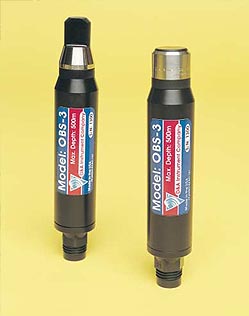
<p style="text-align: left; padding-left: 30px; ">The OBS-3 sensor from D &amp; A Instrument Company measures suspended solids and turbidity with a patented (U.S. Patent No. 4,841,157) backscatter method.<br />It features: nearly linear response to particle concentrations spanning more than three orders of magnitude, an with infrared measurement system; an optical filter with synchronous detection to reject ambient light; a small package; and low power consumption.</p>
<p style="text-align: left; padding-left: 30px; "> </p>
<p style="text-align: left; padding-left: 30px; "><span>*** Calibration of the OBS is undertaken in house with a small recirculating tank, a matlab programme has been developed to enable the group to easily evaluate and plot the data obtained from any RUNTI or SLOT deployment within a matter of minutes on site</span></p>
</td>
</tr>
</tbody>
</table>
<table class="listing">
<tbody>
<tr>
<td><strong>Application</strong></td>
<td colspan="2"></td>
</tr>
<tr>
<td></td>
<td colspan="2">
<div>River and stream gaging<br /> Add-on sensor for CTDs, data loggers, &amp;                                        current meters<br /> Wastewater and effluent measurements<br /> Monitor dredging &amp; mining operations<br /> Permit compliance<br /> Control instrumentation for settling ponds<br /> Sediment transport research<br /> Laboratory measurements</div>
</td>
</tr>
<tr>
<td>
<p> </p>
<p><strong>FEATURES</strong></p>
</td>
<td colspan="2"></td>
</tr>
<tr>
<td></td>
<td colspan="2">
<div>Measures sediment concentrations                                        to 5000 mg/l &amp; turbidity to 4000 NTU</div>
<div>Log pressure, temperature, and salinity<br /> Records 7000 scans of data with programmable                                        sampling scheme<br /> Compact package - 75 mm (3") by 422                                        mm (16.6")<br /> Depth limit - 300 m</div>
</td>
</tr>
<tr>
<td>
<p> </p>
<p><strong>RANGE / ACCURACY</strong></p>
</td>
<td colspan="2" style="text-align: left; "><br /></td>
</tr>
<tr>
<td style="text-align: left; "><strong>Turbidity</strong></td>
<td>
<div>0 to 250 NTU <br /> 0 to 500 NTU <br /> 0 to 1000 NTU <br /> 0 to 2000 NTU or 0 to 4000 NTU</div>
</td>
<td>
<div>0-100 +/- 0.1 NTU<br /> 100 - 500 +/- 1.0 NTU<br /> 500 - 40002 +/- 5.0 NTU</div>
</td>
</tr>
<tr>
<td colspan="2">
<p> </p>
<p><strong>Concentration                                      <sup>1 </sup></strong><span>/ </span><strong><span>Concentration </span><sup>2</sup></strong></p>
</td>
</tr>
<tr>
<td colspan="2">
<div>Mud 0 to 5000 mg/l <br /> Sand 0 to 50 g/l</div>
</td>
<td>
<div>Mud +/- 0.1 mg/l <br /> Sand +/- 0.1 g/l</div>
</td>
</tr>
<tr>
<td colspan="2"><sup>1</sup> Ranges depend on sediment type.</td>
<td><sup>2</sup> With 2nd-order polynomial equation</td>
</tr>
<tr>
<td colspan="2">
<p> </p>
<p><strong>OTHER                                      DATA</strong></p>
</td>
<td></td>
</tr>
<tr>
<td align="right" colspan="2" style="padding-left: 60px; ">Maximum data rate <br /> Infrared wavelength <br /> Maximum depth <br /> Drift <br /> Power</td>
<td>
<div>10 Hz<br /> 875 nm<br /> 500 m<br /> &gt; 5% / year<br /> 9 - 16 Vd.c. / 14 mA</div>
</td>
</tr>
</tbody>
</table>]]></content:encoded>
    <dc:publisher>No publisher</dc:publisher>
    <dc:creator>Verde Massimo</dc:creator>
    <dc:rights></dc:rights>
    <dc:date>2009-11-24T11:40:00Z</dc:date>
    <dc:type>Pagina</dc:type>
  </item>


  <item rdf:about="https://old.fst.unife.it/it/ricerca/aree-di-ricerca-1/costuf/equipment/rcm-9">
    <title>RCM 9</title>
    <link>https://old.fst.unife.it/it/ricerca/aree-di-ricerca-1/costuf/equipment/rcm-9</link>
    <description></description>
    <content:encoded xmlns:content="http://purl.org/rss/1.0/modules/content/"><![CDATA[<h3 style="text-align: center; "></h3>
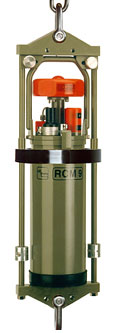
<h3 style="text-align: center; "><span><strong>Recording Current Meter RCM 9 Mk II (AANDERAA instruments)</strong></span></h3>
<p> </p>
<table class="invisible">
<tbody>
<tr>
<td>
<p><strong>Versatile Sampling</strong></p>
<p><i><strong> </strong></i><span>10Hz Burst Sampling or internal averaged modes, user selectable</span></p>
<p> </p>
<p><strong>Deployment service</strong><br /><strong>Mooring Frame</strong></p>
<p>In-line Mooring Frame allowing extraction of instrument without breaking a mooring line<br /> Tensile strength rating increased to 8000 kg<br /> Optional Protection Bars forming a protective cage at a modest price</p>
<p> </p>
<p><strong>Current Measurement</strong></p>
<p>The Current Sensor uses a smart algorithm to auto-detect flow direction, focusing flow measurements along two <span>upstream axis (forward pinging), eliminating influences from instrument payload wake effects.</span></p>
<p>Sampling area is two ±1 degree cones separated by 90 degrees</p>
</td>
<td><img src="https://old.fst.unife.it/it/ricerca/aree-di-ricerca-1/costuf/equipment/RCM9Mk2.jpg" alt="" class="image-inline" title="" /></td>
</tr>
</tbody>
</table>]]></content:encoded>
    <dc:publisher>No publisher</dc:publisher>
    <dc:creator>Verde Massimo</dc:creator>
    <dc:rights></dc:rights>
    <dc:date>2009-11-24T11:40:00Z</dc:date>
    <dc:type>Pagina</dc:type>
  </item>


  <item rdf:about="https://old.fst.unife.it/it/ricerca/aree-di-ricerca-1/costuf/equipment/runti">
    <title>RUNTI</title>
    <link>https://old.fst.unife.it/it/ricerca/aree-di-ricerca-1/costuf/equipment/runti</link>
    <description></description>
    <content:encoded xmlns:content="http://purl.org/rss/1.0/modules/content/"><![CDATA[<h3 style="text-align: center; "></h3>
<h3 style="text-align: center; "><strong>RUNTI: Remote Unit for Nearshore Transport Investigation</strong></h3>
<p> </p>
<table>
<tbody>
<tr>
<td><img class="image-inline" src="http://fst.unife.it/resolveuid/b0f311fabab54bf08036cf5cc1a02c98" /></td>
<td style="padding-left: 30px; ">
<p><strong>RUNTI</strong></p>
<p><strong><br /></strong></p>
<p style="text-align: justify; ">The RUNTI (Remote Unit for Nearshore Transport Investigation) quadrapod was developed in order to obtain time series of water elevation, current speed and suspended sediment transport. RUNTI is a small benthic lander quite different from similar designs, being specifically thought for deployments in shallow lagoon environments, taking into account logistical constraints. The main strongpoint of the lander is its size (about 1.2 high) and weight (less than 100 kg in air). The quadrapod is designed to be completely balanced in order to avoid its leaning on one side during the deployment. The structure is lowered from a boat using a small crane with a diver in the water to assist the operation and make sure that the equipment is levelled and oriented correctly. The sensors on the quadrapod are a <strong><a href="https://old.fst.unife.it/it/ricerca/aree-di-ricerca-1/costuf/equipment/valeport-current-meters" class="internal-link">Valeport 800</a></strong> series bi-axial electromagnetic current meter (EMCM), a Sensym pressure transducer (PT) and a D&amp;A <b><a href="https://old.fst.unife.it/it/ricerca/aree-di-ricerca-1/costuf/equipment/obs-3-sensor" class="internal-link">OBS 3-A Optical Back-scatter Sensor</a></b> (OBS). RUNTI is self logging, with a data logger that can be programmed either for burst or for continuous sampling at frequencies between 1 and 8 Hz. It is also self powered through a battery pack. The OBS and EMCM are mounted at the same height (50 cm) to allow computation of sediment fluxes while the PT is at 27 cm above the sea bed. A diver's compass is mounted on the frame to measure the relative alignment of the EMCM axes referred to the magnetic north. The kit is concluded with a sea switch, a battery pack and a data logger which can be programmed for both burst and continuous recording of data. During deployment, RUNTI can be lowered to the sea/lagoon bed from the side of a barge or boat. Once in place, a diver checks the levelling of the structure and its orientation.</p>
</td>
</tr>
</tbody>
</table>
<p> </p>
<p><strong>Software development</strong></p>
<p style="text-align: justify; ">For analysis of the raw data from RUNTI, they first need to be downloaded from the datalogger to a computer. The next stage involves the conversion of the downloaded data from binary into ASCII formats. At this stage, it was required for the data to be analysed and the various physical parameters extracted. It was hence necessary to write an extensive suit of programmes in Matlab, which has formed a major part of the work so far. The first stage involves a programme for the conversion of the existing ASCII data to a form readable into Matlab. The converted data is then calibrated, given the specific calibration constants for each test, and then plotted. The plots for each burst of data include the parameters of depth, suspended particle matter (SPM), directional currents, resultant current, and current direction, all against time. In addition, separate graphs are plotted which show the burst means and STDs of each parameter against overall time of RUNTI deployment. The Matlab programmes are written in such a way so that the various functions are carried out using a mouse. On execution of the main programme, the user is given options on the screen which include: data conversion, data calibration, time plots for individual bursts, and time plots for the mean and STD of bursts. Hence with a new set of RUNTI data, the user can analyse the results by following the steps and view the plots within minutes of completion of the experiment. The programmes are also written in such a way that they are transportable on a floppy disk and hence the results analysis can be carried out on any computer with the only requirement being the Matlab software. The next stage in the data analysis software is the spectral analysis of the results and its incorporation into the existing suit of programmes with an extra option for the user. <span>The lander has already been deployed on several occasions like for instance in the Gironde from the 25th to the 29th September 1999.</span></p>
<p style="text-align: justify; "> </p>
<p style="text-align: justify; "><span> </span></p>
<div id="_mcePaste">Publication: <a href="https://old.fst.unife.it/it/ricerca/aree-di-ricerca-1/costuf/equipment/runti.pdf/at_download/file" type="application/pdf" class="internal-link internal-link-tofile" title="pdf, 669.2 KB">Modulation of Wave Energy by a Linear Sand Bank in the Gironde Estuary <span>(France): Implications for Coastal Zone Management</span></a></div>]]></content:encoded>
    <dc:publisher>No publisher</dc:publisher>
    <dc:creator>Verde Massimo</dc:creator>
    <dc:rights></dc:rights>
    <dc:date>2009-11-24T11:40:00Z</dc:date>
    <dc:type>Pagina</dc:type>
  </item>


  <item rdf:about="https://old.fst.unife.it/it/ricerca/aree-di-ricerca-1/costuf/equipment/valeport-current-meters">
    <title>Valeport Current Meter</title>
    <link>https://old.fst.unife.it/it/ricerca/aree-di-ricerca-1/costuf/equipment/valeport-current-meters</link>
    <description></description>
    <content:encoded xmlns:content="http://purl.org/rss/1.0/modules/content/"><![CDATA[<h3 style="text-align: center; "><strong>Model 802 Self Recording Electromagnetic Current Meter</strong></h3>
<h3>
<p><strong><br /></strong></p>
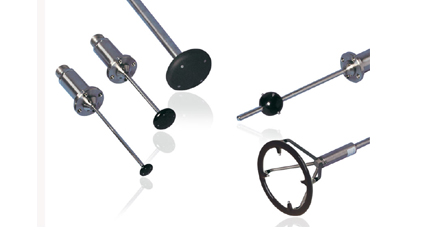
<p><strong>The Model 802 range of Electromagnetic Current Flow Sensors offer precision flow measurement in a wide variety of applications. A choice of sensor designs allows a range of requirements to be met, from the small spatial resolution needed for laminar flow modeling in the laboratory to larger highly durable sensor for use in the surf zone or deep seabed deployments. The electromagnetic technology allows operation in clean water environments, and the system can be supplied in several configurations to suit the application.</strong></p>
<p><strong><br /></strong></p>
</h3>
<h3></h3>
<h3>
<table class="invisible">
<tbody>
<tr>
<td>
<p><i><strong>APPLICATIONS</strong></i></p>
<p>- Sediment Transport Studies<br />- Hydraulic Modelling<br />- Open Channel Current Measurement<br />- Ship's Log<br />- ROV/AUV Speed<br />- Fixed Site Current Measurement</p>
</td>
<td>
<p style="text-align: left; "><i><strong>FEATURES</strong></i></p>
<p style="text-align: left; ">- High Accuracy<br />- High Stability<br />- Low Noise<br />- Low Power Consumption<br />- Choice of Sensor Shapes<br />- Choice of Configurations<br />- Digital or Analogue Output<br />- Wide Measurement Range<br />- Corrosion resistant materials</p>
</td>
</tr>
</tbody>
</table>
</h3>
<p><img src="https://old.fst.unife.it/it/ricerca/aree-di-ricerca-1/costuf/equipment/Valeport_802_currentmeter.jpg" alt="" class="image-inline" title="" /></p>
<h3 style="text-align: center; "></h3>
<h3 style="text-align: left; "></h3>
<h3 style="text-align: left; "></h3>]]></content:encoded>
    <dc:publisher>No publisher</dc:publisher>
    <dc:creator>Verde Massimo</dc:creator>
    <dc:rights></dc:rights>
    <dc:date>2009-11-24T11:40:00Z</dc:date>
    <dc:type>Pagina</dc:type>
  </item>


  <item rdf:about="https://old.fst.unife.it/it/ricerca/aree-di-ricerca-1/costuf/equipment/equipment">
    <title>Equipment</title>
    <link>https://old.fst.unife.it/it/ricerca/aree-di-ricerca-1/costuf/equipment/equipment</link>
    <description></description>
    <content:encoded xmlns:content="http://purl.org/rss/1.0/modules/content/"><![CDATA[<p style="text-align: left; "> </p>
<p style="text-align: left; ">The department has a well-equipped sedimentological laboratory, with a settling tube linked to a Sedigraph for grain size analysis. It maintains two pneumatic vessels for coastal research and a variety of surveying tools, including:</p>
<p style="text-align: left; "> </p>
<p style="text-align: left; "><strong>- </strong><strong>Self Recording Electromagnetic Current Meter</strong><strong> <a href="https://old.fst.unife.it/it/ricerca/aree-di-ricerca-1/costuf/equipment/valeport-current-meters" class="internal-link">(<strong>VALEPORT Model 802</strong></a>)</strong></p>
<p style="text-align: left; ">- <strong>Tide Gauge</strong> (<strong><a href="https://old.fst.unife.it/it/ricerca/aree-di-ricerca-1/costuf/equipment/pressure-transducer-sts" class="internal-link">STS pressure transducer</a></strong>)</p>
<p style="text-align: left; ">- <strong>Acoustic Doppler Profiler (<a href="https://old.fst.unife.it/it/ricerca/aree-di-ricerca-1/costuf/equipment/acoustic-doppler-profiler-trimaran-ocean-science" class="internal-link">Trimaran Ocean Science</a>)</strong></p>
<p style="text-align: left; ">- <strong>Benthic Lander</strong> (<a href="https://old.fst.unife.it/it/ricerca/aree-di-ricerca-1/costuf/equipment/runti" class="internal-link"><strong>RUNTI</strong></a>)</p>
<p style="text-align: left; ">- <strong>Recording Current Meter</strong> (<strong><a href="https://old.fst.unife.it/it/ricerca/aree-di-ricerca-1/costuf/equipment/rcm-9" class="internal-link">RCM 9 Mk II</a> Aandreaa Instruments)</strong></p>
<p style="text-align: left; ">- <strong>Optical Backscatter Sensor </strong>(<strong><a href="https://old.fst.unife.it/it/ricerca/aree-di-ricerca-1/costuf/equipment/obs-3-sensor" class="internal-link">OBS-3 Sensor</a></strong> <strong>D &amp; A Instrument Company</strong>)</p>
<p style="text-align: left; ">-<strong> Acoustic Doppler Currentmeter Profiler (<a href="https://old.fst.unife.it/it/ricerca/aree-di-ricerca-1/costuf/equipment/adcp-acoustic-doppler-current-profiler" class="internal-link">ADCP</a>)</strong></p>
<p style="text-align: left; "><strong>- </strong><strong><strong>S</strong>ingle Beam Echo Sounder</strong> (<a href="https://old.fst.unife.it/it/ricerca/aree-di-ricerca-1/costuf/equipment/sonarlite" class="internal-link"><strong>SonarMite</strong></a>)</p>
<p style="text-align: left; "><strong><strong>- </strong>RTK-GPS</strong> (<a href="https://old.fst.unife.it/it/ricerca/aree-di-ricerca-1/costuf/equipment/gps-rtk" class="internal-link"><strong>R6</strong> <strong>Trimble</strong></a>)</p>
<p style="text-align: left; ">- <strong>Directional Wave Gauge</strong> (<strong><a href="https://old.fst.unife.it/it/ricerca/aree-di-ricerca-1/costuf/equipment/s4dw-interocean" class="internal-link">S4ADW InterOcean System</a></strong>)</p>
<p style="text-align: left; ">-<strong> Unmanned Aerial Vehicle</strong> (<strong><a href="https://old.fst.unife.it/it/ricerca/aree-di-ricerca-1/costuf/equipment/uav" class="internal-link">drone DJI Phantom Visual 3+</a></strong>)</p>
<p style="text-align: left; ">- <strong><a href="https://old.fst.unife.it/it/ricerca/aree-di-ricerca-1/costuf/equipment/fluorescent-tracers" class="internal-link">Fluorescent Tracers</a></strong></p>
<p style="text-align: left; ">- <strong><a href="https://old.fst.unife.it/it/ricerca/aree-di-ricerca-1/costuf/equipment/rfid-tracers" class="internal-link">RFID Tracers</a></strong></p>
<p style="text-align: left; ">-<strong> <a href="https://old.fst.unife.it/it/ricerca/aree-di-ricerca-1/costuf/equipment/cameras-video-monitoring" class="internal-link">Cameras (Video-Monitoring)</a></strong></p>
<p style="text-align: left; "><strong>- Marine drone (<a href="https://old.fst.unife.it/it/ricerca/aree-di-ricerca-1/costuf/equipment/marine-drone-ck-14" class="internal-link">Codevintec CK-14</a>)</strong></p>
<p style="text-align: left; "><strong>- Laser Scanner (<a href="https://old.fst.unife.it/it/ricerca/aree-di-ricerca-1/costuf/equipment/laser-scanner-p30" class="internal-link">Leica P30</a>)</strong></p>]]></content:encoded>
    <dc:publisher>No publisher</dc:publisher>
    <dc:creator>Verde Massimo</dc:creator>
    <dc:rights></dc:rights>
    <dc:date>2009-11-24T11:40:00Z</dc:date>
    <dc:type>Pagina</dc:type>
  </item>


</rdf:RDF>